Take the Buldok GTM Score
CRM Comparison

HubSpot vs. Alternatives: When Each CRM Makes Sense

Not every CRM system is right for every company. Instead of a feature-comparison table, we’ll show you the dimensions where HubSpot differs from Salesforce, Pipedrive, Zoho, Dynamics 365, and local Czech CRMs, and when another platform makes more sense.

HubSpot Partner since 2018

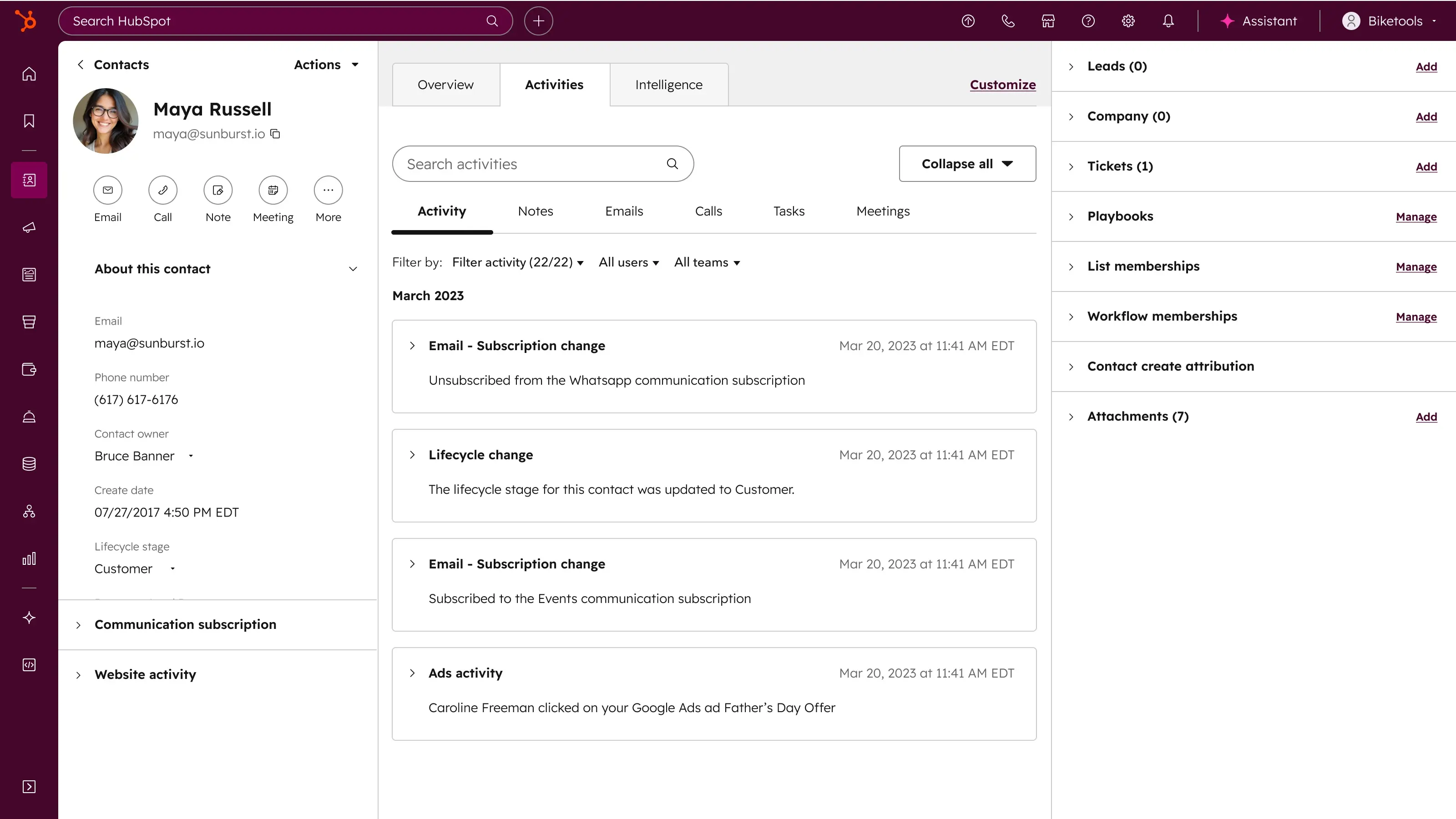
Smart CRM - Smart CRM Contact Record
Why CRM Comparisons Tend to Mislead

A feature table won’t tell you which CRM fits your company

Anyone looking for a new CRM mostly finds two things: endless feature-comparison tables, and “best CRM of the year” rankings that ignore company size or industry. Neither tells you what actually matters.

Feature-matrix paralysis

Dozens of rows of features, most of which any given company will use only a fraction of. Deciding by counting checked boxes leads to a CRM that does a lot, but nothing particularly well for your specific operation.

Rankings without segmentation

“Best CRM of the year” compares a hundred-person startup with a multinational enterprise in the same article. What’s best for one can be needlessly complex, or simply inadequate, for the other.

Pricing tables without context

Comparing only per-user, per-month pricing ignores what implementation, administration, and hidden integration costs actually run. A cheaper CRM on paper can end up costing more in practice.

Comparisons written by the vendors themselves

A lot of the comparisons out there come straight from one of the CRMs being compared. They inevitably favor the author, even when they try to sound neutral.

The underlying problem

The question “which CRM is best” doesn’t have an answer. The question “which CRM makes sense for your team, industry, and growth stage” does. This page takes the second approach.

A SCENARIO YOU KNOW

A company spends weeks comparing CRMs using a feature table, where one tool wins on the number of checked boxes. Nobody asks whether the team actually needs that depth of customization, or whether they’ll end up paying for it in an implementation they don’t have the capacity for.

Six months later, they realize three-quarters of the features that drove the decision are things nobody on the team actually uses.

A feature matrix won’t help with that decision. The dimensions where CRMs actually differ will.

Why We Compare Differently

Dimensions instead of a feature table

HubSpot uses this same approach, dimensions instead of a feature matrix, on its own comparison pages. We go a step further: instead of “why HubSpot wins,” we’ll tell you honestly, for each competing category, when it makes sense to pick the other option. If you’re more focused on what to clarify before buying HubSpot at all, see the pre-purchase page.

A feature table tells you what a tool can do. Dimensions tell you whether it fits your team, industry, and growth stage.

Six dimensions worth comparing by

Total cost and licensing model

Price per user, per month is only part of the equation. What implementation and administration cost, and how the licensing model scales with team size, matter just as much.

All-in-one, or a stack of specialized tools

One platform for marketing, sales, and service, versus a combination of specialized tools connected by integrations. Both have their place, the question is what your team actually needs.

Localization and local language

The depth of local-language interface, support, and market knowledge varies a lot between platforms. For a company without a dedicated IT team, that can be the deciding factor.

Partner ecosystem

The breadth and depth of the partner network determines how easily you’ll find help with implementation and long-term administration, locally or internationally.

Scaling with company growth

What’s enough today may not be enough in two years. Some platforms scale smoothly, others force a painful move to a different tier, or an entirely different system.

AI and automation

How deeply AI is built into everyday data work varies between platforms and is evolving fast. Check the current state directly with the platform, not against an older comparison.

COMPETITORS

Five alternatives, and when each one makes sense

Enterprise CRM ecosystem

Salesforce remains the dominant enterprise CRM. The key difference: HubSpot is an all-in-one platform built for usability, Salesforce is a modular ecosystem built for deep customization.

For companies that want sales, marketing, and service on one platform without a large development team, HubSpot tends to be the faster route to a productive setup.

Enterprise CRM ecosystem

Salesforce remains the dominant enterprise CRM. The key difference: HubSpot is an all-in-one platform built for usability, Salesforce is a modular ecosystem built for deep customization.

For companies that want sales, marketing, and service on one platform without a large development team, HubSpot tends to be the faster route to a productive setup.

When HubSpot is the right pick, and when to consider an alternative

HubSpot makes sense if:

  • you want marketing, sales, and service on one connected platform (sooner or later)

  • you’re growing and need a system that scales without a painful move to another platform

  • you value a rollout measured in weeks, not months

  • you need a broad partner network for implementation and long-term support

Consider an alternative instead if:

  • you’re a large enterprise organization with a need for deep customization in a regulated industry, Salesforce tends to be the stronger choice there

  • you’re a pure sales team with no need for marketing functionality, Pipedrive tends to be more straightforward there

  • you’re a small company on a limited budget looking to replace your whole SaaS stack, Zoho or Freshworks make sense there

Four questions to speed up your decision:

1

Does your team need marketing, sales, and service connected on one platform, or is a pure sales tool enough?

2

Do you have the internal IT capacity for a months-long enterprise implementation, or do you want to be productive within weeks?

3

Is budget the deciding factor for you, or is it feature depth and user-experience quality?

4

Are you already invested in a specific ecosystem, Microsoft or Salesforce, for example, that the new CRM needs to connect to?

Frequently asked questions about HubSpot vs. alternatives

It depends on team size and the tier chosen on both platforms. For smaller and mid-sized teams, HubSpot tends to come out cheaper at a comparable feature scope; for large enterprise deployments with deep customization, the gap can shift. The best way to compare your specific scenario is in a consultation.

Yes, that’s a common scenario. Before adding HubSpot alongside an existing system, it’s worth clarifying where the source of truth should flow for your key data. That’s covered in detail on the before buying HubSpot page.

No, the user interface isn’t available in Czech.

Rollout with HubSpot is usually a matter of weeks. With more complex enterprise systems like Dynamics 365, which combine CRM and ERP, it’s typically months, with a corresponding demand on internal IT capacity and implementation budget.

Yes. If you decide to move from another platform, whether Salesforce, Pipedrive, or a local CRM, that’s a HubSpot migration: a managed data transfer without losing your history.

Ready to find out if HubSpot is the right choice for you?

Take a free look at what HubSpot looks like on the inside, or go straight to discussing how it compares to your current situation. We’ll tell you honestly, even if another platform wins.

  • HubSpot Partner since 2018
  • 60+ HubSpot implementations delivered
  • Honest advice, even when another platform wins