HubSpot Content Hub

Content marketing software that actually scales

HubSpot Content Hub gives your team AI-powered tools to create, manage, and repurpose content across every channel - all from one platform connected to your CRM. Build your website. Publish your blog. Host your podcasts. Measure what works.

content-hub-hero
The Content Reality

You need more content than your team can produce. And the content you have? It's scattered everywhere.

If you're running or working in a growing B2B company, you've probably experienced some version of this reality:

Content demand is infinite, but your team isn't

Marketing wants blog posts. Sales wants case studies. The website needs updating. Social needs fresh content daily. Your team is constantly behind, and the backlog only grows. You're either producing less than you need or burning out the people trying to keep up.

Every channel demands more. Your headcount stays the same.

Your content lives in a dozen different places

Blog posts in one CMS. Landing pages in another. Videos on YouTube. Podcasts somewhere else. PDFs in shared drives. Nobody knows what exists, what's current, or what's performing. Finding and reusing content takes as long as creating it from scratch.

When everything is everywhere, nothing is findable.

You can't prove what's working

You publish content. Traffic happens. Maybe leads come in. But connecting content to revenue? That's a spreadsheet nightmare. You can't tell which blog posts drive pipeline, which landing pages convert best, or whether that podcast is worth the effort.

Without clear attribution, content strategy is just guessing.

You can't answer basic questions about what's working.

Which marketing campaigns actually generate revenue? How long do deals stay in each pipeline stage? Why did we lose that big prospect? You're making decisions based on gut feel because getting real data requires hours of manual analysis—if it's even possible.

What works at 20 customers breaks at 200.

The informal processes that worked when your company was small become chaos at scale. Growth creates more complexity, not less. You hire more people but somehow get less done.

The Underlying Problem

These aren't separate problems - they're symptoms of the same root cause: content tools that don't connect to your business data and workflows that depend on manual coordination.

Most marketing teams try to solve these symptoms one at a time. WordPress for the blog. A separate landing page tool. Canva for graphics. Google Docs for drafts. Each tool does its job, but now content lives in five places, nobody knows which version is current, and publishing a single campaign requires logging into four different platforms.

The more tools you add, the more time your team spends on logistics instead of creating content that actually drives results.

A Scenario You Might Recognize

Marketing needs a new landing page for next week's campaign. The copywriter drafts it in Google Docs. The designer creates visuals in Figma. Someone requests the page from the developer - who's backlogged for two weeks.

The campaign launches late. When it finally goes live, the form submissions go to a spreadsheet that someone has to manually import into the CRM. By the time sales sees the leads, three days have passed.

Meanwhile, marketing can't tell which blog posts influenced the sign-ups because the analytics tool doesn't connect to the CRM. The CEO asks for ROI numbers. Marketing sends a report full of caveats and asterisks.

The content was good. The distribution was fine. But the disconnected systems made it impossible to move fast or prove what worked.

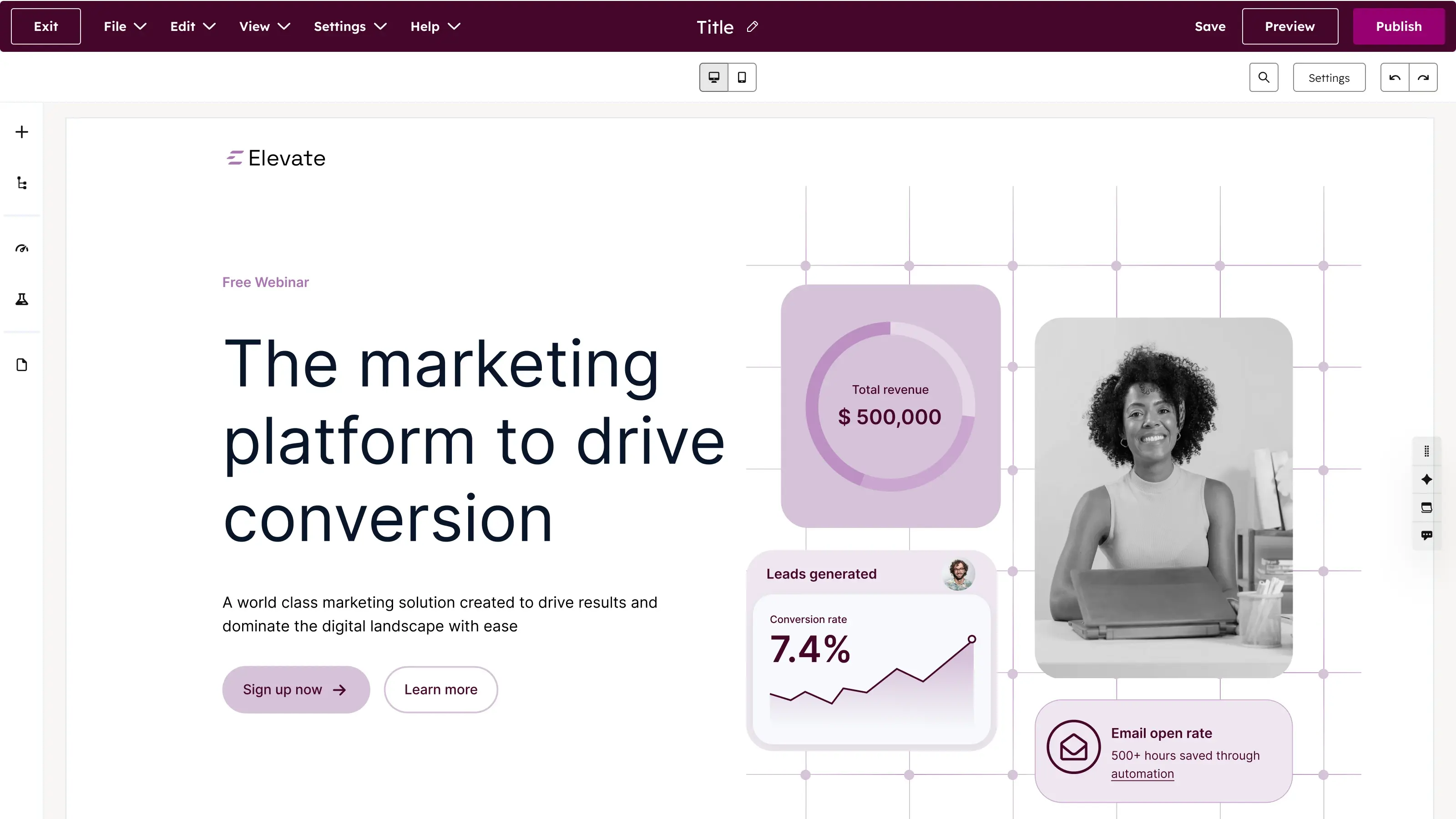
Your content team doesn't need another tool. They need one platform that makes content creation faster, content management simpler, and content performance measurable.

The Solution

HubSpot Content Hub: Create more content without more headcount

Content Hub isn't just a CMS. It's an AI-powered content marketing platform that helps you create, manage, and optimize content across your entire customer journey - all connected to your CRM. Write faster with AI. Publish anywhere from one place. Know exactly what's working.

One platform. Every content type. Complete visibility into performance.

What makes Content Hub different

AI That Actually Creates Content

Breeze Content Agent writes blog posts, landing pages, case studies, and more - in your brand voice. Content Remix turns one piece into assets for every channel. Your team multiplies their output without multiplying their hours.

Everything in One Place

Blog, website, landing pages, podcasts, videos, gated content - all managed from a single platform. No more jumping between tools. No more wondering where something lives. One source of truth for all your content.

Built for Marketers, Not Developers

Drag-and-drop editors, pre-built templates, and flexible themes mean marketers can create and update pages without waiting for dev support. When you do need custom work, developers have full access to code.

Connected to Your CRM

Every piece of content is connected to contact data. See which content drives leads and deals. Personalize experiences based on who's visiting. Report on content's actual impact on revenue.

Core Capabilities

What Content Hub does (and why it matters)

Build and manage your website without the headaches

Create responsive, SEO-optimized websites that your marketing team can update without developer help. Flexible enough for custom builds, simple enough for everyday edits.

Website Pages

Build and maintain your company website.

Create responsive website pages with drag-and-drop editing or work with developers on custom designs. Either way, marketers can make updates without breaking things. Premium hosting included - fast, secure, and scalable.

  • Drag-and-drop page builder
  • Pre-designed website themes
  • Mobile-responsive by default
  • Premium hosting with SSL, CDN, and security monitoring
  • Multi-language support (20+ languages)
Powered by Breeze AI

AI that multiplies your content team's output

Breeze is HubSpot's AI - built into every part of Content Hub. It writes first drafts, repurposes content, generates images, and optimizes for search. Your team focuses on strategy and quality. AI handles the volume.

Breeze Content Agent

An AI agent that creates complete content pieces: blog posts, landing pages, case studies, podcasts - in your brand voice. Give it a topic and audience, get a publishable draft.

Content Remix

Transform one piece of content into assets for every channel. A blog post becomes social posts, email copy, video scripts, and ad variations - automatically, in your voice.

Brand Voice

Train AI on your writing samples and style guide. Every piece of AI-generated content sounds like your brand, not generic AI output.

AI Translation

Automatically translate content into 20+ languages. Reach global audiences without hiring translators for every piece.

AI Image Generation

Create custom images for any content. Describe what you need, get original visuals that match your brand and message.

Better Together

Content that's connected to your entire customer journey

Content Hub is powerful on its own. But when content, marketing, sales, and service share the same platform, every team benefits. Content drives leads. Leads become customers. Customer stories become new content.

Content + Marketing

Fuel your campaigns with content.

Blog posts feed email nurtures. Landing pages capture leads. Gated content drives form submissions. Everything is connected - publish content once, use it everywhere in your marketing.

No more copying content between systems. No more broken links or outdated assets.

Content + Sales

Arm your sales team with the right content.

Sales sees which content prospects have engaged with. They can share relevant case studies, guides, and resources directly from the CRM. Content that helps close deals is easy to find and track.

Marketing knows what sales needs. Sales has content that actually helps.

Content + Smart CRM

Personalize content based on who's visiting.

Show different content to leads vs. customers, to different industries, or to different stages of the buying journey. Smart content uses CRM data to personalize experiences automatically.

Your website adapts to every visitor. Every page becomes more relevant.

PRICING

Understanding HubSpot Pricing

The Structure

HubSpot uses a tiered pricing model. Each Hub has multiple levels:

  • Free Tools — Limited features, free forever
  • Starter — Core features for small teams
  • Professional — Full automation and advanced features
  • Enterprise — Advanced permissions, customization, and scale

The right tier depends on your company size, complexity, and what features you need.

Free Tools

What you get:

  • Basic CRM and limited features of each Hub

Best for:

Very small teams testing HubSpot, or companies with minimal needs

Investment / Limitations:

Limited contacts, limited features, no automation, HubSpot branding on forms and emails

Key Insight: HubSpot's free CRM is genuinely useful—not just a trial. Many companies use it for years before upgrading.

Starter

What you get:

  • Core features, removes HubSpot branding, basic automation

Best for:

Small businesses getting started with structured marketing and sales

Investment / Limitations:

Starting at $20/month per seat for most Hubs

Key Insight: Starter is a significant upgrade from Free, but lacks the automation and advanced features that growing companies usually need.

Enterprise

What you get:

  • Advanced permissions, custom objects, hierarchical teams, advanced analytics, sandboxes

Best for:

Larger organizations with complex needs

Investment / Limitations:

Marketing Hub Enterprise starts at $3,600/month, Sales Hub Enterprise at $150/month per seat

Key Insight: Enterprise isn't just "more of Professional"—it unlocks features that only make sense for larger, more complex organizations.

Key Pricing Concepts

Seat-Based Pricing

Sales Hub, Service Hub, and Commerce Hub charge per seat at Professional and Enterprise tiers. Each person who needs full functionality needs their own paid seat.

However, you can have unlimited free "View-Only Seats" for people who just need to see data without editing.

Contact-Based Pricing (Marketing Hub)

Marketing Hub pricing scales with your database size—specifically, the number of "marketing contacts" you're actively emailing or targeting with ads. Non-marketing contacts are free.

This means you can store your entire customer database without paying extra, as long as you're not marketing to all of them.

Bundles

HubSpot offers bundles that combine multiple Hubs at a discount. The "Customer Platform" bundle includes all Hubs together.

Onboarding Requirements

Some tiers require paid onboarding from HubSpot or a certified partner. This isn't optional—it's built into the purchase.

The Real Cost Consideration

License cost is only part of the investment. Implementation, training, and ongoing optimization matter just as much for success.

Companies that buy HubSpot and "figure it out themselves" often end up with underutilized portals and poor ROI. Companies that invest in proper setup—whether through HubSpot's onboarding or a certified partner—typically see results much faster.

Your Implementation Partner

We don't just set up Content Hub. We make it drive results.

Content marketing software only works when it's built around your content strategy - not the other way around. Too many companies buy Content Hub and end up with a website that nobody updates, AI tools nobody uses, and analytics nobody looks at.

We're here to make sure that doesn't happen.

HubSpot Platinum Partner

We've implemented Content Hub for B2B companies who need content to drive pipeline. We know how to structure blogs that rank, build websites that convert, and create workflows that keep content production moving.

Strategy First, Tools Second

Before we touch the platform, we understand your content goals. Who are you trying to reach? What content do they need at each stage? How will you measure success? Technology should amplify your strategy - not replace it.

Adoption and Training

The best content platform is the one your team uses every day. We don't just configure Content Hub - we train your marketers to create content confidently, show them how to use AI effectively, and build templates that make publishing fast and consistent.

We know content teams are stretched thin. The last thing you need is a complex tool that adds work instead of removing it. We build Content Hub implementations that make content creation easier - so your team can focus on quality, not wrestling with technology.

platinum-badge-white
Client Results

What marketing teams say after implementing with Buldok

HubSpot Marketing Hub customers see:
167%
increase in website traffic
3x
more inbound leads
83%
report improved conversion

Frequently Asked Questions About HubSpot

Content Hub is an all-in-one content marketing platform, not just a CMS. It includes AI content creation, built-in analytics, CRM integration, and marketing automation - things that require multiple plugins and integrations in WordPress.

Security and hosting are fully managed. You don't worry about updates, backups, or plugin conflicts. And because it's connected to HubSpot's CRM, you can personalize content and track performance in ways WordPress can't match natively.

For marketing teams that want to focus on content - not website maintenance - Content Hub is typically a better fit.

Content Hub works great on its own for website, blog, and content management. But the real power comes when combined with Marketing Hub.

With both, you get email marketing, marketing automation, lead nurturing, and campaign management - all connected to your content. Blog subscribers become leads. Leads get nurtured with personalized content. It's a complete inbound marketing system.

Breeze Content Agent is an AI that creates complete content pieces - blog posts, landing pages, case studies, and more. You give it a topic, audience, and any specific requirements. It generates a full draft in your brand voice.

You train it on your existing content and style guide, so output sounds like your brand. It's not a replacement for human writers - it's a first-draft generator that saves hours of work. Your team edits and polishes rather than starting from scratch.

Yes. We handle website migrations regularly. Your pages, blog posts, and content come over. We rebuild your design in HubSpot's theme system so it looks the same (or better) and is easier to maintain.

Migrations from WordPress, Webflow, and other platforms typically take 4-8 weeks depending on site size. SEO is preserved - URLs, redirects, and metadata are handled carefully.

Content Hub has built-in SEO tools. As you write, you get recommendations for improving on-page SEO. Site-wide audits identify technical issues. Google Search Console integration shows ranking data directly in HubSpot.

For AI search (like ChatGPT and Perplexity), Content Hub includes AEO guidance - helping you structure content so it's more likely to be cited in AI-generated answers.

Content Remix takes one piece of content and transforms it into multiple formats for different channels. Upload a blog post, and get social posts for LinkedIn, Twitter, and Facebook. Get email copy. Get ad variations. Get video scripts.

All in your brand voice, all formatted for each channel's requirements. It's not just copying and pasting - it's genuine repurposing that would otherwise take hours.

Yes - it's excellent for B2B. The CRM integration means you can see how content influences deals, not just traffic. Personalization lets you show different content to different industries or company sizes. And the focus on thought leadership content (blogs, case studies, podcasts) fits B2B content strategies well.

Most of our clients are B2B companies where content is a primary demand generation channel.

Basic setup (website migration, blog, landing pages) typically takes 4-6 weeks. Full implementation with AI training, content workflows, and advanced features takes 8-12 weeks.

You'll be publishing content in Content Hub before the full implementation is complete. We prioritize getting you productive quickly.

Depends on complexity. A simple Starter setup might take 2-4 weeks. A full Professional implementation typically takes 2-3 months. Enterprise implementations with complex integrations can take 4-6 months or more. Rushing implementation usually backfires.

Ready to create more content without more headcount?

The best content platform is the one that makes your team more productive - not more overwhelmed. Let's talk about how Content Hub can transform your content operation.

30-minute call with a Content Hub specialist
Specific recommendations for your content challenges
Honest assessment - even if HubSpot isn't the right fit